Artificial intelligence is transforming the contact centre industry.
From AI-powered voice agents and chatbots to automated quality assurance and customer support systems, organisations are increasingly looking at AI as a way to reduce costs, improve efficiency, and scale customer service operations.
In many cases, those investments are delivering genuine value.
But there is a question I don’t see discussed often enough:
What happens if the economics of AI change?
For many organisations, the decision to automate customer interactions is being made based on today’s costs, today’s technology, and today’s competitive environment.
The challenge is that we don’t know if those conditions will remain the same five years from now.
AI Pricing Today May Not Be AI Pricing Tomorrow
Much of the AI industry is still relatively young.
Many providers are focused on growth, market share, and customer acquisition. Investors have poured billions into AI platforms, infrastructure, and development, often prioritising expansion over profitability.
That’s not unusual. Many technology industries have followed a similar path.
However, as AI providers mature, investor expectations change.
Growth eventually needs to be accompanied by sustainable profit.
When that happens, pricing models often evolve.
The services that appear inexpensive today may not remain so forever.
For organisations that have heavily automated customer interactions, this creates a strategic risk.
If AI costs increase significantly over time, businesses may find themselves locked into platforms and operating models that are more expensive than originally anticipated.
The Outsourcing Challenge
This becomes particularly interesting in the outsourcing and contact centre industry.
Many service providers are currently positioning AI-powered solutions as a way to reduce costs for clients.
That value proposition makes sense when AI costs are predictable and relatively low.
But if the cost of AI infrastructure, usage, licensing, or platform subscriptions increases, providers may face a difficult conversation.
They may need to:
- Increase pricing
- Absorb rising costs
- Reduce margins
- Re-engineer solutions
None of those options are particularly attractive.
Clients who adopted AI primarily for cost savings may become far less enthusiastic if those savings begin to disappear.
The Hidden Cost of Losing Human Capability
There’s another risk that deserves attention.
As organisations automate more interactions, they often reduce their investment in frontline capability.
Experienced agents leave.
Team sizes shrink.
Knowledge is lost.
Training programs are scaled back.
Initially this can appear to be a logical cost-saving exercise.
However, rebuilding operational capability is rarely quick or inexpensive.
If customer expectations change, AI performance falls short, regulations evolve, or economic conditions shift, organisations may find themselves needing experienced people they no longer have.
Operational resilience is difficult to measure until it becomes necessary.
Technology History Offers Lessons
The technology industry has seen this pattern before.
New technologies emerge.
Early adoption accelerates.
Investment pours in.
Businesses restructure around the new model.
Eventually the market matures and organisations gain a clearer understanding of the true long-term costs and benefits.
The winners are rarely those who moved fastest.
They are often the organisations that moved thoughtfully.
They adopted new technology while retaining enough flexibility to adapt as the market evolved.
AI Should Augment, Not Eliminate
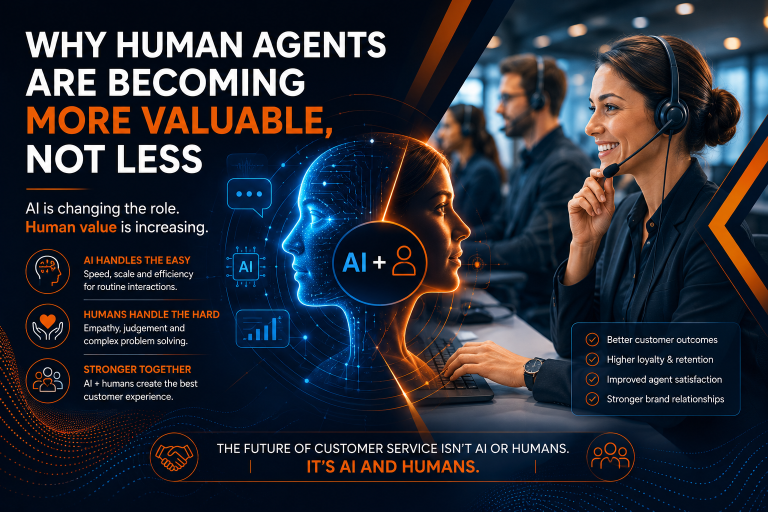
In my view, the strongest contact centre strategies today are not based on replacing people entirely.
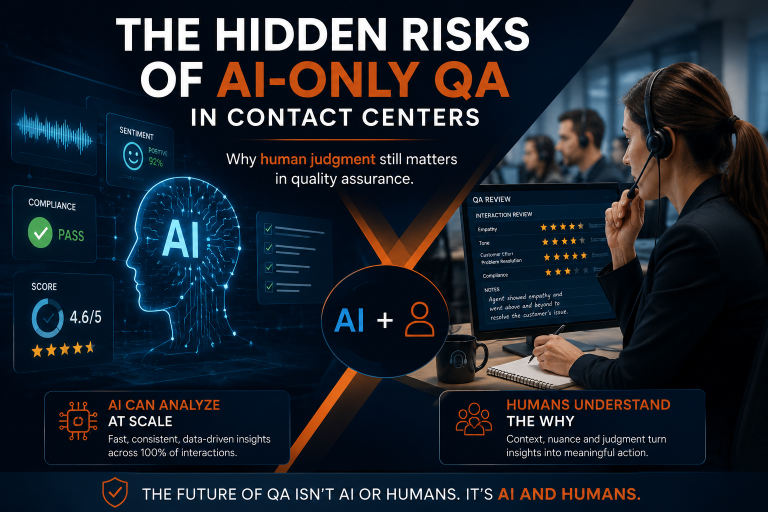
They are based on combining the strengths of AI and human expertise.
AI can:
- Handle routine enquiries
- Improve response times
- Automate repetitive work
- Surface insights and trends
- Assist agents in real time
Human teams provide:
- Judgement
- Empathy
- Adaptability
- Relationship management
- Complex problem solving
Together they create a more resilient operating model.
One that can adapt if technology changes.
One that can adapt if costs change.
And one that can continue delivering excellent customer experiences regardless of market conditions.
The Question Leaders Should Be Asking
The question isn’t whether AI belongs in customer service.
It clearly does.
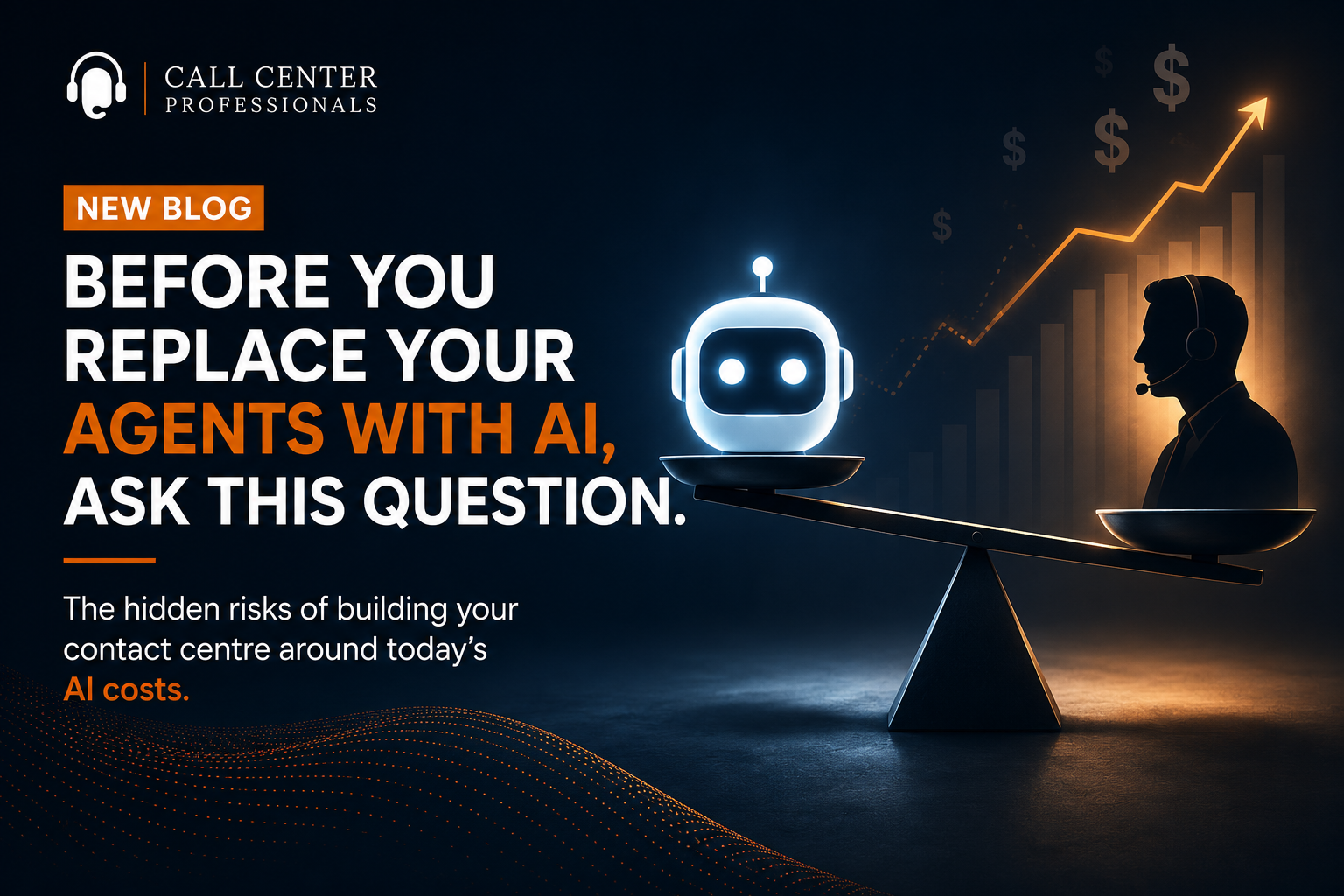
The question is whether your organisation is building a strategy around the capabilities of AI or the current cost of AI.
Those are not necessarily the same thing.
Technology will continue to evolve.
Pricing models will evolve.
Markets will evolve.
The organisations that thrive will be those that embrace innovation while preserving the flexibility, capability, and human expertise needed to adapt when those changes arrive.
Because in customer service, resilience is often just as important as efficiency.