The Hidden Risks of AI-Only QA in Contact Centers
Artificial Intelligence is rapidly transforming contact center quality assurance.
What once required teams of auditors manually reviewing interactions can now be performed at scale by AI systems capable of analyzing thousands of calls, emails, and chats in minutes. For contact center leaders facing increasing pressure to reduce costs while improving oversight, the promise is understandably attractive.
But there is a growing risk emerging across the industry:
Some organizations are beginning to treat AI as a replacement for quality analysts rather than a tool that supports them.
While AI can dramatically improve efficiency, relying entirely on automated quality assurance creates blind spots that can damage customer experience, employee development, and operational decision-making.
Where AI QA Excels
To be clear, AI has an important role to play in modern quality assurance programs.
AI can:
- Review 100% of customer interactions rather than a small sample
- Identify compliance breaches at scale
- Detect keywords, phrases, and sentiment patterns
- Highlight coaching opportunities
- Reduce administrative effort
- Surface trends much faster than manual review alone
These capabilities allow QA teams to spend less time finding problems and more time solving them.
For many organizations, AI-enhanced QA is already delivering significant value.
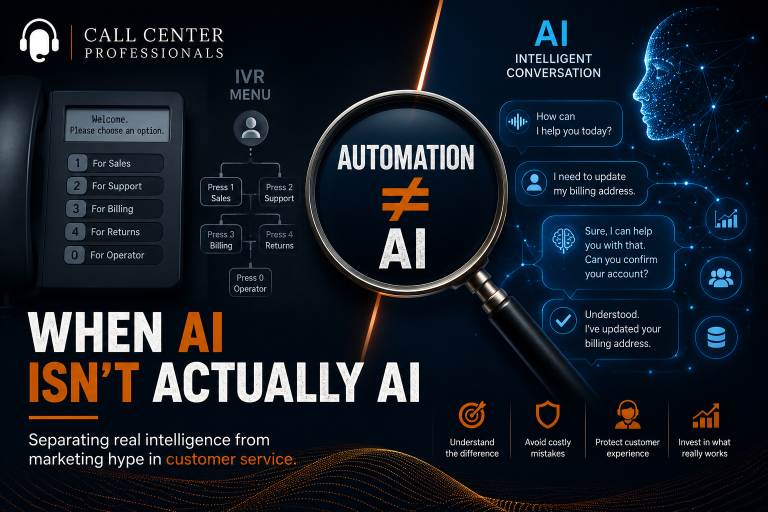
The challenge begins when organizations assume AI understands interactions in the same way experienced humans do.
Customer Conversations Are Not Just Data
Every experienced quality analyst has encountered interactions that technically meet process requirements but still feel wrong.
Perhaps the agent followed every required step yet sounded dismissive.
Perhaps empathy was present in the script but absent in the delivery.
Perhaps the customer accepted the outcome but left frustrated.
These nuances are often obvious to an experienced human reviewer but difficult for AI to accurately assess.
Customer interactions contain:
- Context
- Tone
- Intent
- Emotional cues
- Cultural nuances
- Situational complexity
These are areas where human judgment remains critically important.
A conversation is more than a collection of words. It is an interaction between people.
The Risk of Reinforcing Bad Behaviour
Another challenge with AI-only QA is that AI evaluates against the rules it has been given.
If the scoring framework is poorly designed, AI can consistently reward the wrong behaviours at scale.
For example:
An agent who rigidly follows a script may receive excellent automated scores despite creating a poor customer experience.
Conversely, an agent who adapts naturally to help a distressed customer may lose points because the interaction deviated from an expected pattern.
Without experienced human oversight, organizations risk creating a feedback loop that encourages compliance at the expense of genuine customer service.
Coaching Requires Human Understanding
Quality assurance should not exist solely to generate scores.
Its primary purpose is improvement.
Effective coaching requires understanding:
- Why the interaction unfolded as it did
- What influenced agent behaviour
- Which skills need development
- How individual circumstances affected performance
AI can identify potential coaching opportunities.
Humans determine which ones actually matter.
The best coaching conversations involve empathy, context, and professional judgment—qualities that remain difficult to automate.
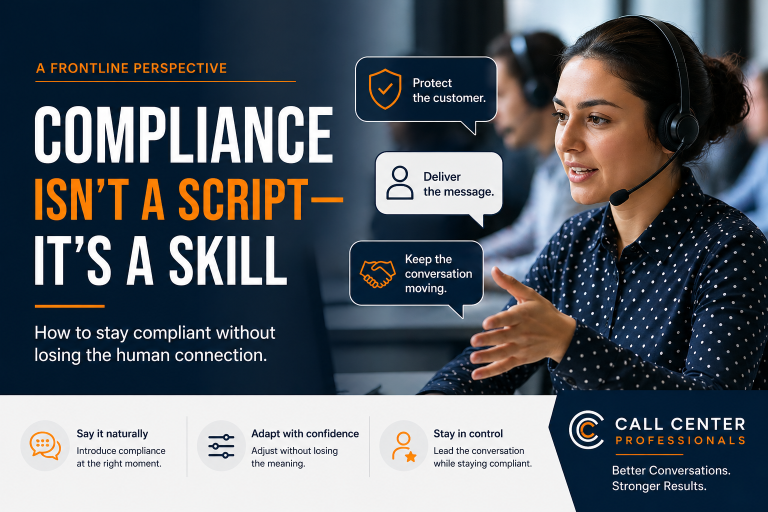
Compliance Is More Than Keywords
Many organizations use AI successfully to identify compliance risks.
However, compliance assessments often involve interpretation.
A phrase may technically meet regulatory requirements while still creating customer confusion.
An interaction may contain no prohibited language yet still present risk due to how information was communicated.
Experienced QA professionals understand the difference between procedural compliance and practical compliance.
That distinction matters.
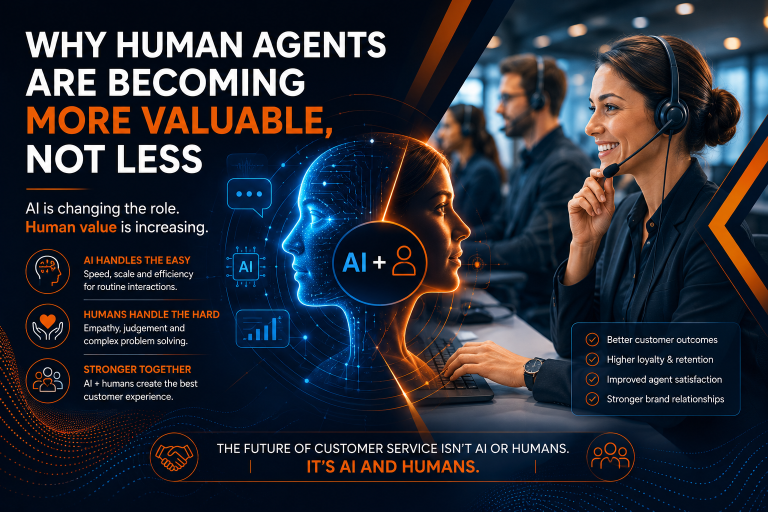
The Future Is Hybrid QA
The question is no longer whether AI belongs in quality assurance.
It does.
The question is how organizations combine AI efficiency with human expertise.
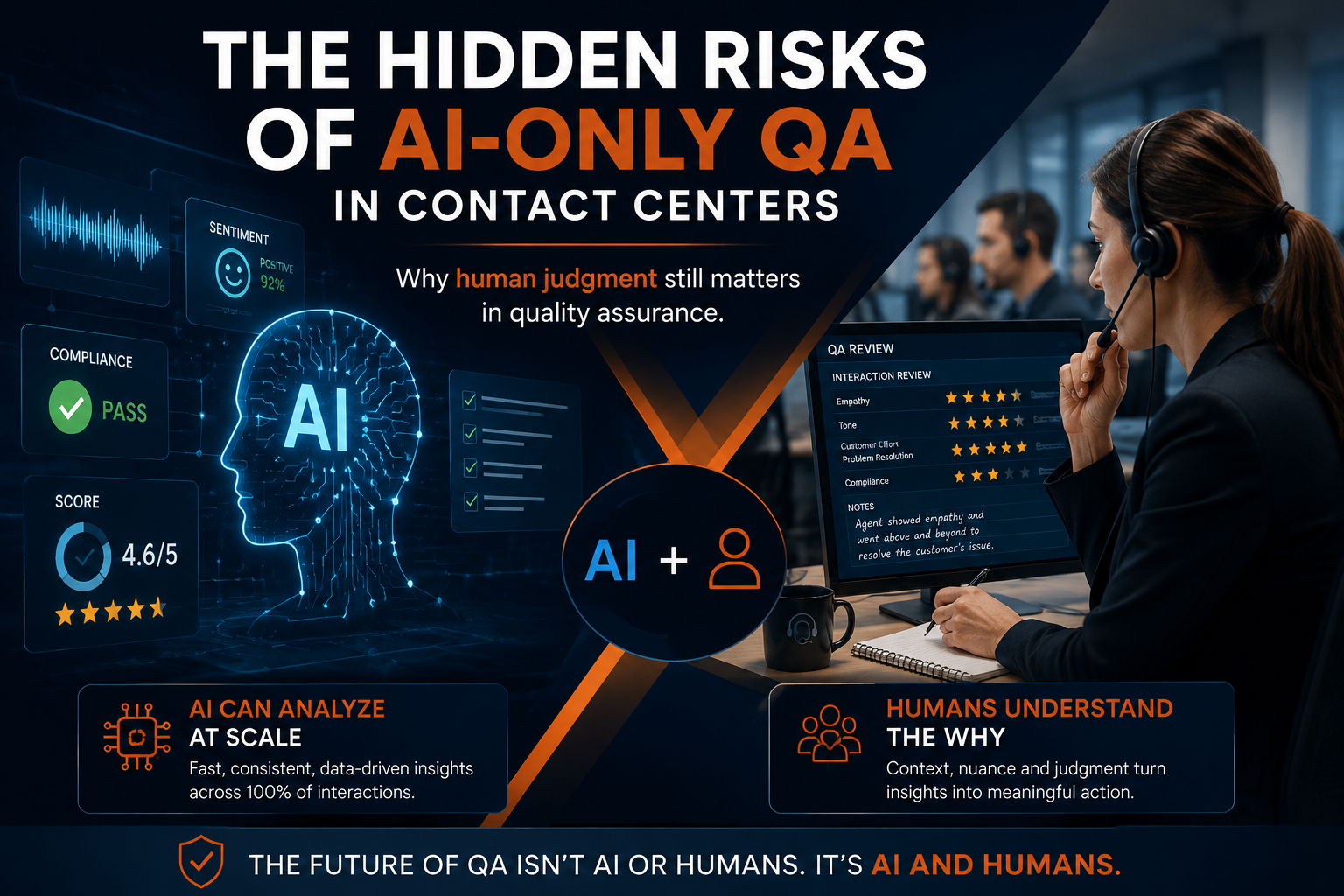
The strongest QA programs increasingly use a hybrid approach:
- AI reviews every interaction
- AI identifies trends and risks
- AI highlights potential coaching opportunities
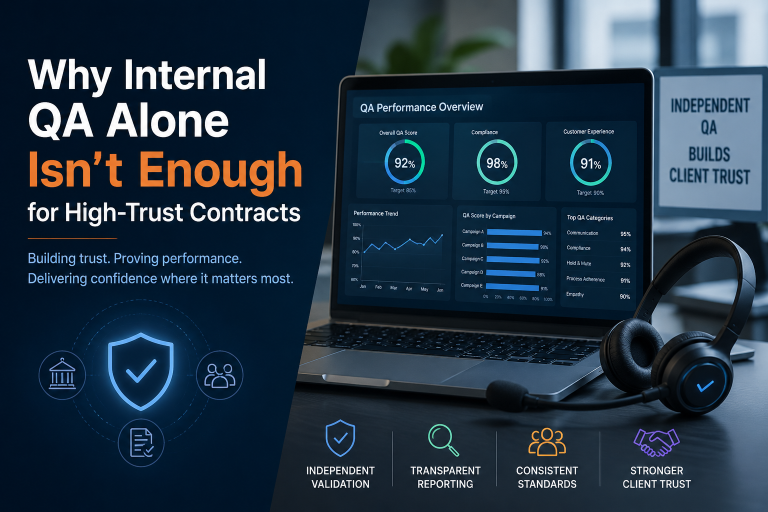
- Human analysts validate findings
- Human reviewers assess nuance and context
- Human coaches deliver meaningful development
This approach combines the scalability of technology with the judgment and experience of skilled quality professionals.
Final Thoughts
AI is transforming quality assurance, and its benefits are impossible to ignore.
However, customer experience is ultimately a human experience.
Organizations that remove human judgment entirely from their QA process risk losing the very insights that drive meaningful improvement.
The future of quality assurance is not AI versus humans.
It is AI and humans working together to deliver more accurate insights, stronger coaching, better compliance outcomes, and ultimately a better customer experience.