Why Human Agents Are Becoming More Valuable, Not Less
For years, we’ve been hearing the same prediction: AI is coming for customer service jobs.
With every new chatbot, virtual assistant, and AI-powered customer service platform, headlines suggest that human agents are becoming less relevant.
After spending decades working in and around contact centers, I believe the opposite may be true.
The reality is that AI isn’t making skilled customer service professionals less valuable. It’s making them more valuable than ever.
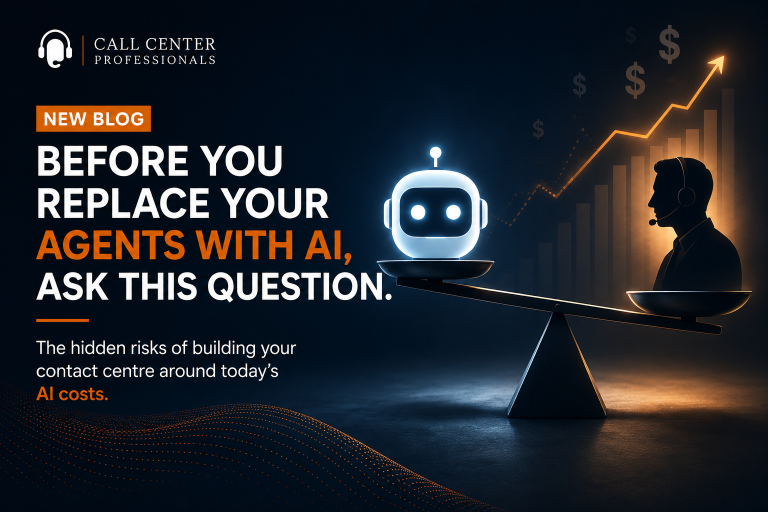
The role is changing, certainly. But the organizations that succeed in the coming years won’t be the ones that remove humans entirely. They’ll be the ones that use AI to handle routine work while empowering people to focus on the interactions that matter most.
AI Is Taking the Easy Conversations
Historically, contact centers handled a huge volume of simple interactions.
Customers called to:
- Check account balances
- Update contact information
- Track deliveries
- Confirm opening hours
- Reset passwords
- Make simple payments
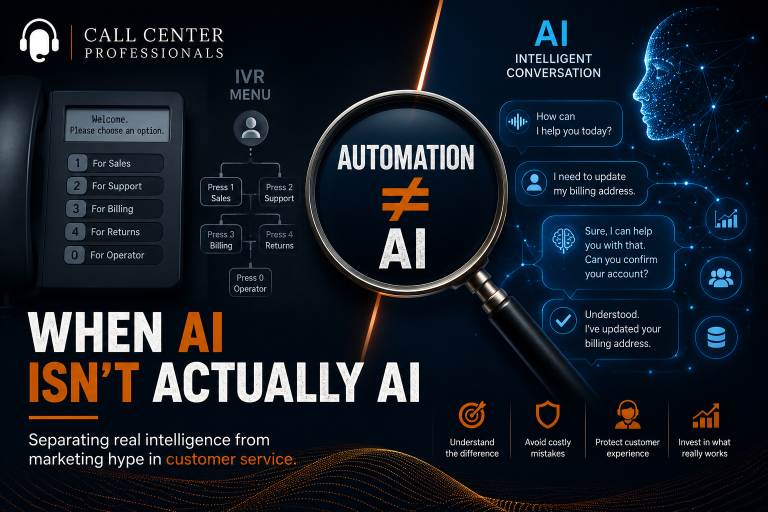
These are precisely the types of tasks AI excels at.
Modern AI systems can process these requests quickly, consistently, and often without requiring human intervention.
From a business perspective, this makes perfect sense. Customers get faster answers, and organizations can reduce operational costs.
But something interesting happens when AI removes the routine work.
The interactions left behind become significantly more complex.
The Remaining Calls Are the Hardest Calls
When a customer reaches a human today, it’s increasingly because AI couldn’t solve their problem.
These customers often arrive frustrated, confused, emotional, or facing a situation that doesn’t fit neatly into a predefined process.
They may have:
- Experienced a service failure
- Received conflicting information
- Been through multiple transfers
- Faced an unusual circumstance
- Suffered financial hardship
- Experienced a personal crisis
These aren’t situations that can always be solved with a script or workflow.
They require judgement.
They require critical thinking.
Most importantly, they require human understanding.
AI Understands Patterns. Humans Understand Context.
One of the biggest misconceptions about AI is that understanding language is the same as understanding people.
AI can identify keywords.
AI can detect sentiment.
AI can recognise patterns across millions of interactions.
What it cannot fully understand is context.
A customer who sounds angry may actually be scared.
A customer who appears calm may be on the verge of cancelling a long-standing relationship with your company.
An agent may choose to deviate from a script because they recognise that doing so will de-escalate a difficult situation.
These are the moments where experience matters.
These are the moments where human judgement creates better outcomes.
Emotional Intelligence Is Becoming a Premium Skill
As AI takes over transactional work, emotional intelligence becomes one of the most valuable skills in customer service.
The agents who thrive in the future won’t necessarily be the fastest.
They’ll be the ones who can:
- Build trust quickly
- Show empathy genuinely
- Resolve complex situations
- Adapt to unexpected circumstances
- Make sound decisions under pressure
- Turn negative experiences into positive ones
These capabilities have always been important.
What’s changing is that they are becoming the primary reason customers need to speak with a human in the first place.
Coaching and Development Become More Important
There’s another challenge that many organizations are beginning to encounter.
If AI handles most of the simple interactions, new agents have fewer opportunities to learn the fundamentals.
Historically, agents developed confidence through repetition.
They handled straightforward enquiries before progressing to more complicated situations.
If AI removes much of that entry-level work, organizations will need stronger coaching, mentoring, and quality assurance programs to develop future talent.
The human element doesn’t disappear.
In many ways, it becomes even more important.
The Future Isn’t AI or Humans
Too many conversations frame this as a choice.
AI versus people.
Automation versus agents.
Technology versus experience.
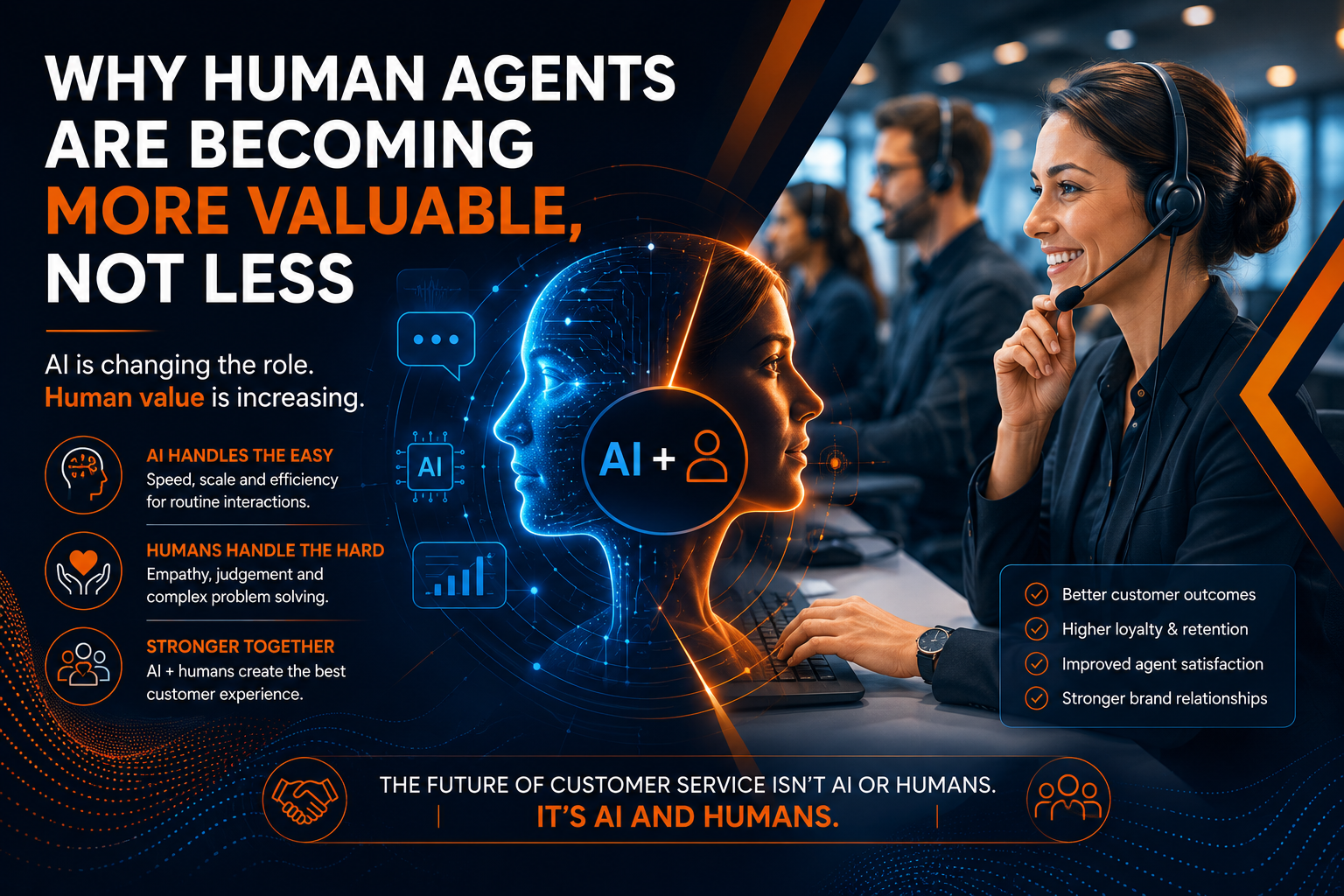
The most successful contact centers won’t choose one over the other.
They’ll combine both.
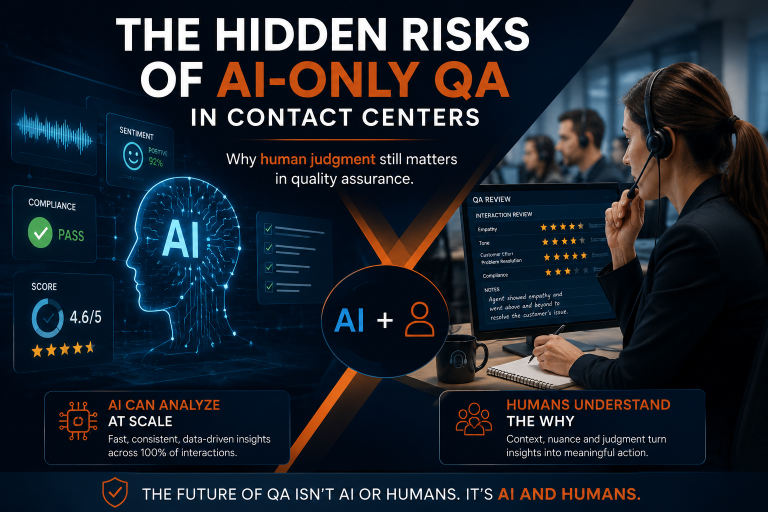
AI can review 100% of interactions.
AI can identify trends and risks.
AI can provide real-time guidance.
AI can eliminate repetitive tasks.
Human agents can provide empathy.
Human agents can apply judgement.
Human agents can build relationships.
Human agents can solve the problems that don’t fit neatly into a workflow.
Together, they create an experience that neither could deliver alone.
Final Thoughts
The future of customer service isn’t about replacing people.
It’s about allowing people to focus on what they do best.
As AI continues to transform the industry, the value of skilled human agents may actually increase.
Because when customers face their most important, emotional, or complex moments, they rarely want another system.
They want someone who understands.
And that’s something technology still can’t fully replicate.